




Here's a number that should make you sit up straight: Walmart is the single largest private employer in roughly 22 states across America. Not second place. Not "one of the biggest." The biggest.
Now here's another piece of news rolling through the business headlines: Walmart is aggressively pushing AI and automation. The goal? Keep headcount flat. Maybe even shrink it. Grow the business without growing the payroll.
And that's where we run face-first into a wall of economic common sense.
The Economy Isn't a Spreadsheet, It's People
We talk about "the economy" like it's some machine humming away in a factory somewhere. GDP goes up. Inflation ticks down. Unemployment drops a tenth of a percent. Numbers on a screen.
But that's not what the economy actually is.
The economy is your neighbor who works at the distribution center. It's the cashier at your local Walmart who spends her paycheck at the diner down the street. It's the truck driver who pays his mortgage, which pays the bank teller, who buys groceries, which pays the stocker, who… you get the idea.
The economy is a living, breathing organism made up of people. Every paycheck is a heartbeat. Every job is a cell keeping the whole thing alive.
So what happens when the biggest employer in half the country decides it needs fewer cells?

The Henry Ford Lesson (In Reverse)
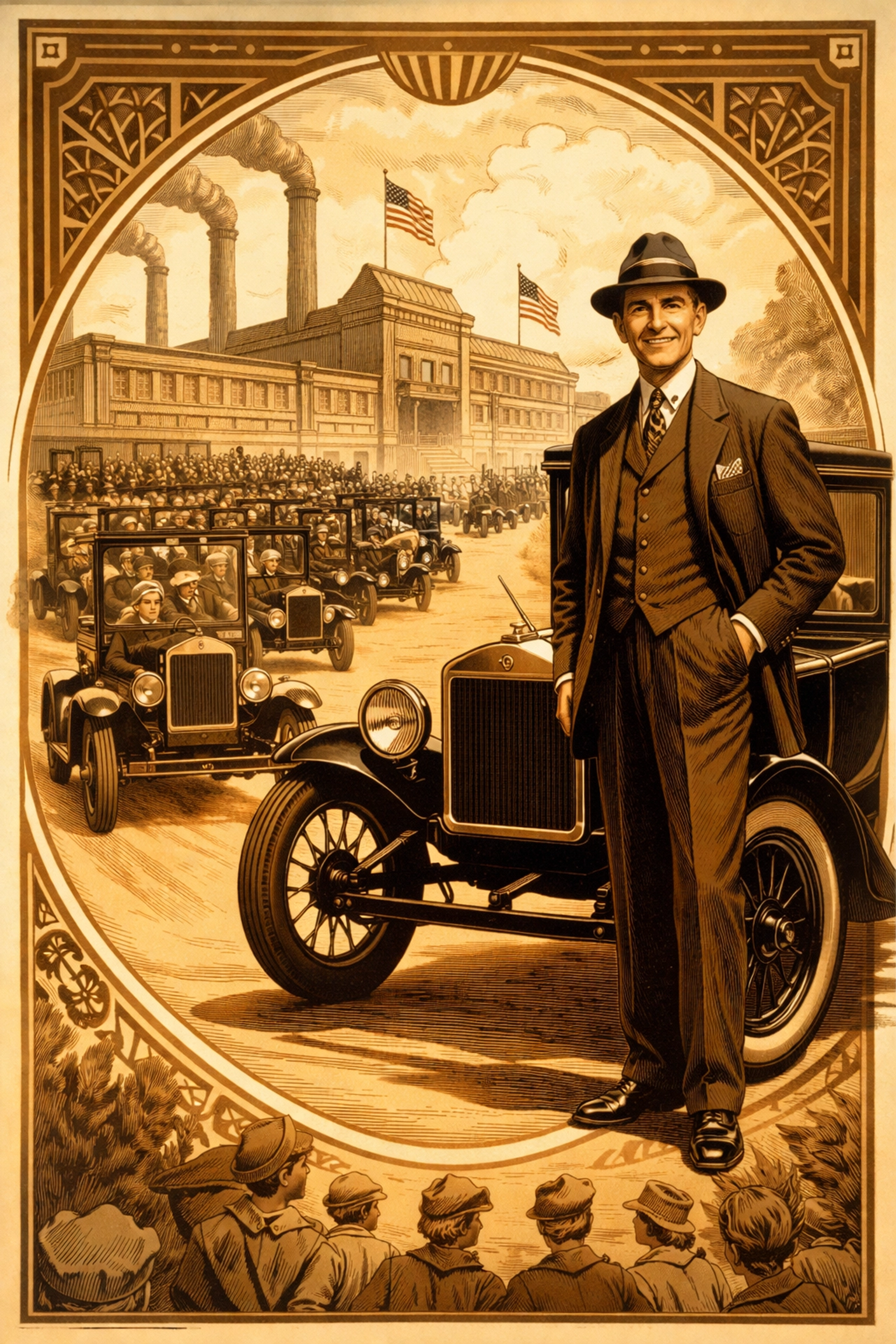
Let's rewind about a hundred years. Henry Ford did something that his fellow industrialists thought was absolutely insane: he paid his assembly line workers $5 a day, roughly double the going rate at the time.
Was Ford just a really nice guy? Maybe. But he was also a sharp businessman. He understood something fundamental:
If your workers can't afford to buy what they're making, you've got a problem.
Ford wanted his employees to be able to purchase the Model T cars rolling off their own assembly lines. He wasn't just building cars, he was building customers.
Now flip that logic upside down.
If Walmart, the store where a huge chunk of working-class America buys everything from groceries to clothes to car batteries, starts replacing those workers with robots and AI, what happens next?
Those former workers aren't shopping at Walmart anymore. Or anywhere else. Because they don't have jobs. They don't have paychecks. They don't have money.
And a customer without money isn't a customer at all.
The Paradox Gets Worse the Bigger You Are
Here's the thing about Walmart specifically: they're not just any employer. They're THE employer in huge swaths of the country.
In states across the South, the Midwest, and the Sun Belt, Walmart isn't competing for workers, they ARE the job market. When Walmart sneezes, entire regional economies catch a cold.
Research has shown this dynamic playing out in real time. During economic downturns, Walmart's core customer base, working-class, budget-conscious shoppers, gets squeezed hard. They still shop at Walmart because they need the low prices. But they have less money to spend overall.
The data showed a clear split: Walmart stores in areas with lower unemployment outperformed stores in economically stressed areas by a significant margin. The very people Walmart depends on to fill their shopping carts are the same people most vulnerable to economic hardship.
Now imagine Walmart accelerating that hardship by cutting jobs.
It's like a snake eating its own tail.
"But Automation Creates New Jobs!"
You'll hear this argument a lot. "Sure, we're eliminating cashier positions, but we're creating new roles in tech support, robotics maintenance, and AI management!"
Okay. Let's think about that for a second.
Walmart employs around 1.6 million people in the United States. A huge percentage of those jobs are entry-level positions: cashiers, stockers, cart pushers, customer service reps. Jobs that don't require a four-year degree or specialized training.
Now, how many robotics technicians does it take to maintain the machines that replace 500 cashiers?
Maybe… five? Ten if you're being generous?
The math doesn't math.
You're not trading jobs one-for-one. You're trading hundreds of accessible, working-class jobs for a handful of specialized positions that most displaced workers won't qualify for.
And those displaced workers? They were your customers.

The Domino Effect Nobody Talks About
Let's play this out a little further.
Walmart cuts 100,000 jobs over the next few years through automation and AI efficiency. (That number isn't crazy, they've already been holding headcount flat while growing revenue.)
Those 100,000 people were spending money. Not just at Walmart, but everywhere:
- Local restaurants
- Gas stations
- Landlords collecting rent
- Car dealerships
- Grocery stores (yes, including Walmart)
- Amazon (let's be honest)
- Their kids' schools through tax revenue
When the paycheck disappears, ALL of that spending disappears. The diner loses customers. The gas station cuts hours. The landlord can't collect rent. The whole ecosystem starts to wobble.
And here's the kicker: every other big company is watching Walmart. If Walmart proves they can boost profits by slashing labor costs through automation, every CEO in America will want to do the same thing.
Target. Amazon. McDonald's. Kroger. Home Depot.
Now multiply that domino effect by every major employer in the country.
Who's left to buy anything?
The Economy Needs Circulation
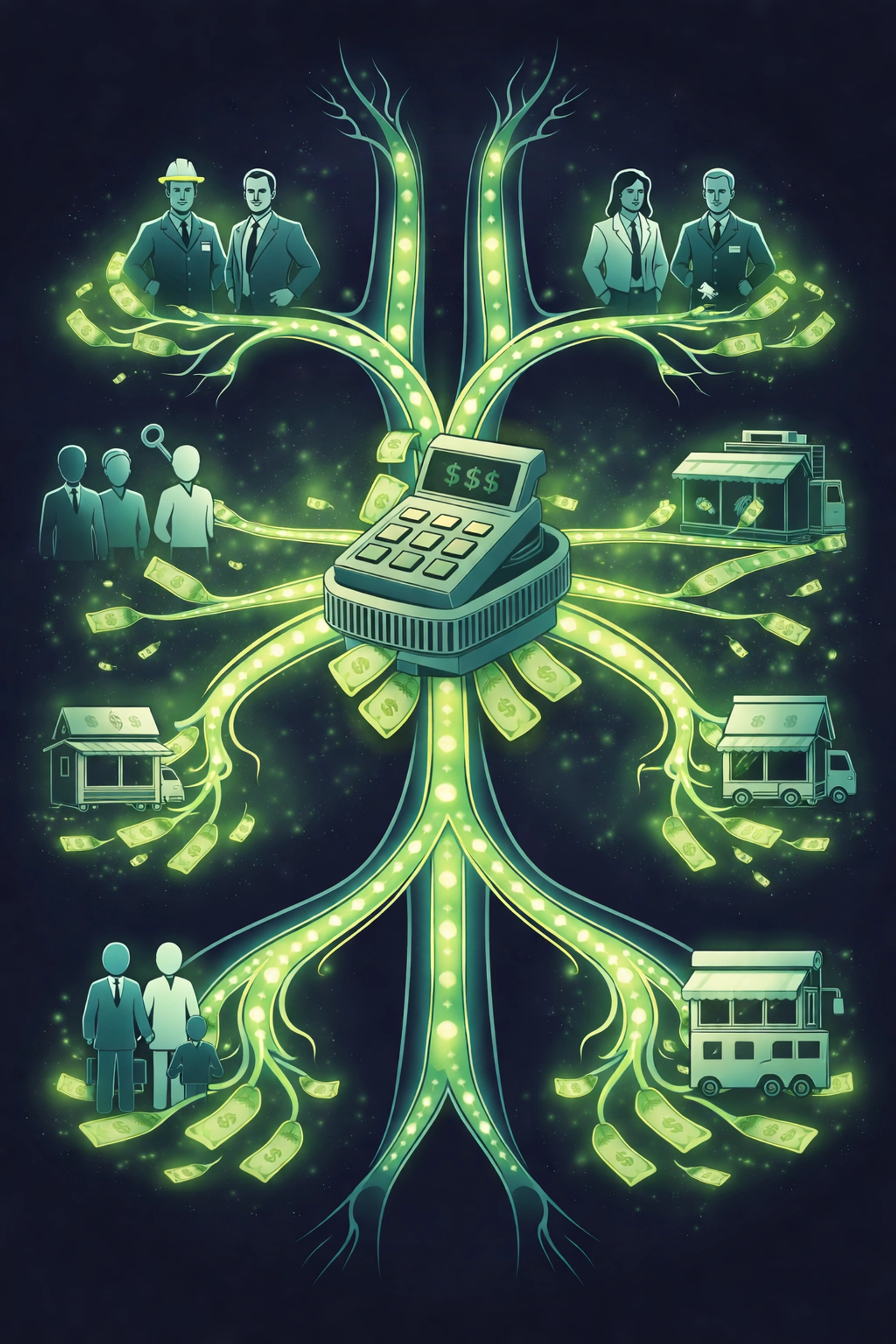
Think of money like blood. It needs to circulate to keep the body alive.
A paycheck is a pump. It moves money from the corporate bank account into the hands of a worker. That worker spends it at another business. That business pays its workers. Those workers spend. Around and around it goes.
When you remove the paychecks: when you replace workers with machines that don't eat, don't pay rent, don't buy Christmas presents: you're cutting off circulation.
The money pools at the top. The bottom dries out. And eventually, even the top starts to wonder why nobody's buying their stuff anymore.
This Isn't Anti-Technology
Let me be clear: I'm not saying automation is evil. I'm not saying AI is the enemy. Technology has done incredible things for productivity, safety, and convenience.
But technology is a tool. And like any tool, it matters how you use it.
If automation is used to make workers more productive: to help them do more, earn more, and create more value: that's a win.
If automation is used purely to delete paychecks and boost quarterly earnings for shareholders… we've got a problem. A big one.
Because shareholders can't buy 1.6 million Walmart shopping carts worth of stuff every week. Regular people do that. Regular people with regular jobs and regular paychecks.
The Bottom Line
The economy isn't an abstraction. It's not a stock ticker or a GDP chart or a line on some economist's graph.
The economy is people. It's you. It's me. It's the person scanning your groceries and the one driving the delivery truck and the one stocking the shelves at 4 AM.
When we forget that: when we treat workers as line items to be optimized away: we're not just hurting those workers. We're sawing off the branch we're all sitting on.
Walmart figured out decades ago that low prices bring in customers. But they might be forgetting the other half of that equation:
Customers need paychecks to pay those low prices.
If we delete the paycheck, we delete the customer.
And if we delete enough customers, we delete the economy itself.
Be mindful, be watchful and good luck.