



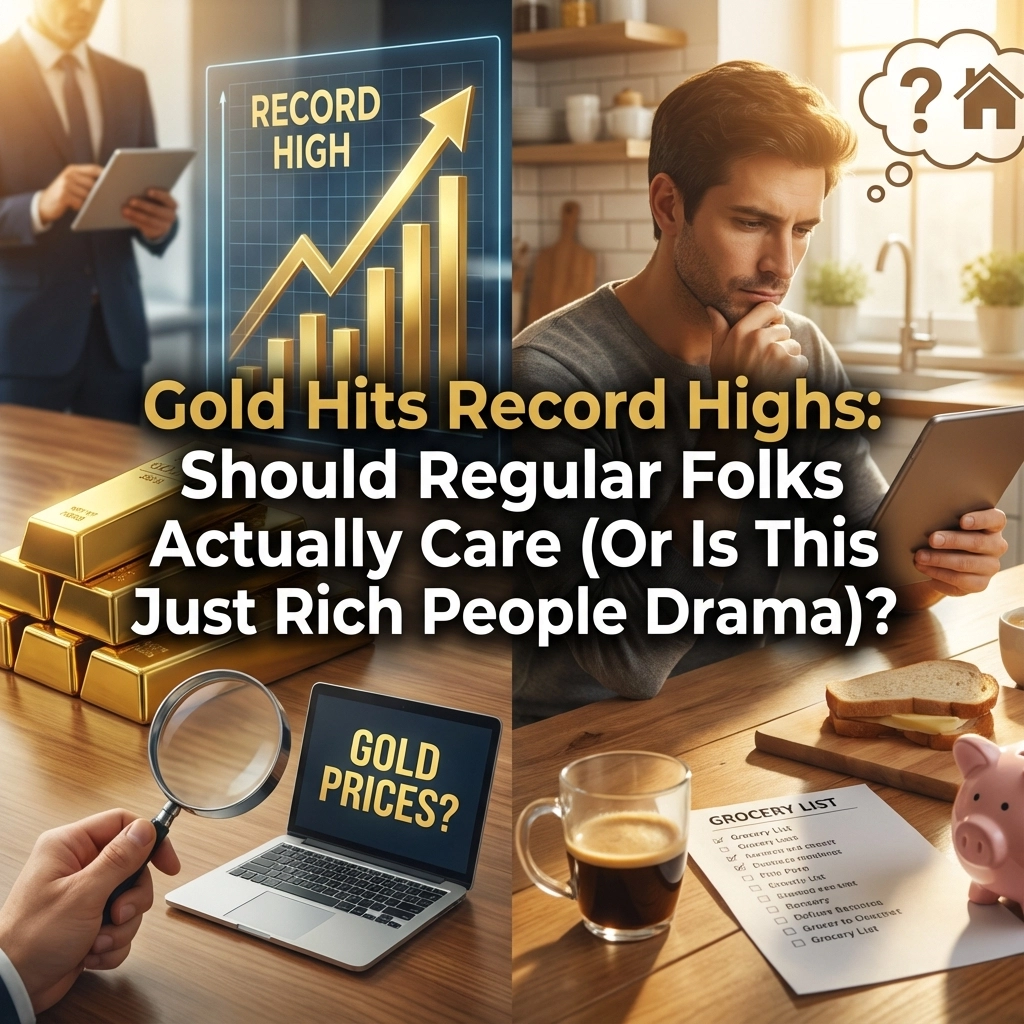
You've probably seen the headlines: Gold just hit another record high. Again. And you're probably thinking, "Great, another thing rich people are excited about while I'm over here trying to figure out why my grocery bill went up $30 this week."
But here's the thing, gold hitting record highs isn't just rich people drama. It's actually a pretty big deal for regular folks, even if you've never owned a gold bar in your life and have no plans to start now.
What's Actually Happening With Gold Right Now?
Let's start with the numbers. Gold is currently trading around $4,468 per troy ounce. That's up about 69% from last year, and it hit an all-time high of $4,794 back in December. Morgan Stanley thinks it could hit $4,800 by the end of 2026.
To put that in perspective: if you had somehow scraped together $2,650 to buy an ounce of gold at the start of 2025, you'd have about $4,468 today. That's not a bad return, especially when your savings account is probably paying you about 0.5% interest.

But here's what matters more than the price itself, it's why gold is going up. And those reasons have everything to do with your daily financial life, whether you care about shiny metals or not.
The Real Drivers Behind Gold's Rise
Gold doesn't just randomly shoot up because people suddenly decided they like jewelry more. There are specific economic forces at play, and they're the same forces that affect your mortgage rate, your job security, and how much you pay for everything from gas to groceries.
Interest Rates and Fed Policy
The biggest driver right now? Everyone's expecting the Federal Reserve to cut interest rates. When interest rates are low, holding gold becomes more attractive because you're not missing out on much by not having your money in bonds or savings accounts that pay higher returns.
Think about it this way: if your savings account pays 5% interest, keeping money in gold (which pays zero interest) feels pretty stupid. But if rates drop to 1%? Suddenly gold looks a lot more reasonable.
Geopolitical Uncertainty
The recent crisis in Venezuela has investors spooked. When the world feels unstable, people and institutions start buying "safe haven" assets, things they think will hold value even if everything else goes sideways. Gold has been that "safe haven" for literally thousands of years.
Central Bank Buying
Here's something that might surprise you: central banks around the world have been buying gold like crazy. These aren't your local credit union managers, these are the people who literally control the money supply for entire countries. When they're loading up on gold, it usually means they're worried about something.

Who Actually Cares About Gold?
The Obvious Players
Sure, wealthy investors and hedge funds care about gold. They're always looking for ways to protect their wealth and diversify their portfolios. When they smell economic trouble, they start buying gold faster than people buy toilet paper during a pandemic scare.
Central Banks
As mentioned, central banks are major gold buyers. They use it to back their currencies and as insurance against economic catastrophe. When your country's central bank is buying gold, they're essentially saying, "We need backup plans for our backup plans."
Regular Investors (More Than You'd Think)
You might be surprised how many regular people own some gold through their retirement accounts. Many 401(k) plans offer gold ETFs, and plenty of folks have small positions without really thinking about it.
But here's the key point: you don't need to own gold for gold prices to matter to you.
Should Regular People Actually Care?
Yes, But Not For The Reasons You Think
You probably shouldn't run out and buy gold bars to stuff under your mattress. But you should definitely pay attention to what gold prices are telling us about the economy.
Think of gold as a financial weather vane. When it's spinning wildly and pointing up, it's usually because economic storms are brewing. Those same storms affect:
- Your job security: Economic uncertainty often leads to layoffs and hiring freezes
- Your borrowing costs: The same forces driving gold up influence mortgage rates and credit card rates
- Inflation: When people lose faith in currency, prices for everyday goods tend to rise
- Your retirement accounts: Market volatility that drives people to gold also hammers stock and bond prices

What This Means For Your Wallet Right Now
The factors pushing gold higher: Fed policy uncertainty, geopolitical tensions, and inflation fears: are the same factors that could make your life more expensive in the coming months.
If the Fed cuts rates (which many expect), your savings account returns will drop, but it might also make borrowing cheaper. If inflation picks up (which gold buyers are betting on), everything from your rent to your groceries could get more expensive.
The geopolitical uncertainty that's driving safe-haven demand could also disrupt supply chains, making goods more expensive and harder to find.
The Practical Bottom Line
You don't need to become a gold bug, but you should treat record gold prices as a warning signal. When gold is hitting all-time highs, it usually means:
- Lock in favorable rates while you can: If you need a mortgage, car loan, or want to refinance, don't wait around
- Build up your emergency fund: Economic uncertainty often leads to job market volatility
- Review your retirement allocations: Market turbulence might be coming
- Prepare for higher prices: Stock up on non-perishable essentials if you have storage space
Is This Different From Previous Gold Rushes?
Every gold surge feels different in the moment, but this one has some unique characteristics. We're seeing central bank buying at levels not seen in decades, combined with retail investor interest through gold ETFs and cryptocurrencies (which some people treat as "digital gold").
The scale is also different. We're not talking about gold going from $300 to $400 an ounce. We're looking at moves from under $2,000 to nearly $5,000 in just over a year. That's the kind of move that suggests some serious economic anxiety.
What Comes Next?
Morgan Stanley's forecast of $4,800 gold by late 2026 suggests they think the economic uncertainty driving current prices will persist. That could mean continued market volatility, ongoing geopolitical tensions, and Fed policy that keeps investors nervous.
For regular folks, this probably means continued economic uncertainty. The same forces that make gold attractive: low real interest rates, inflation concerns, geopolitical risk: tend to make daily life more expensive and unpredictable.

The Real Takeaway
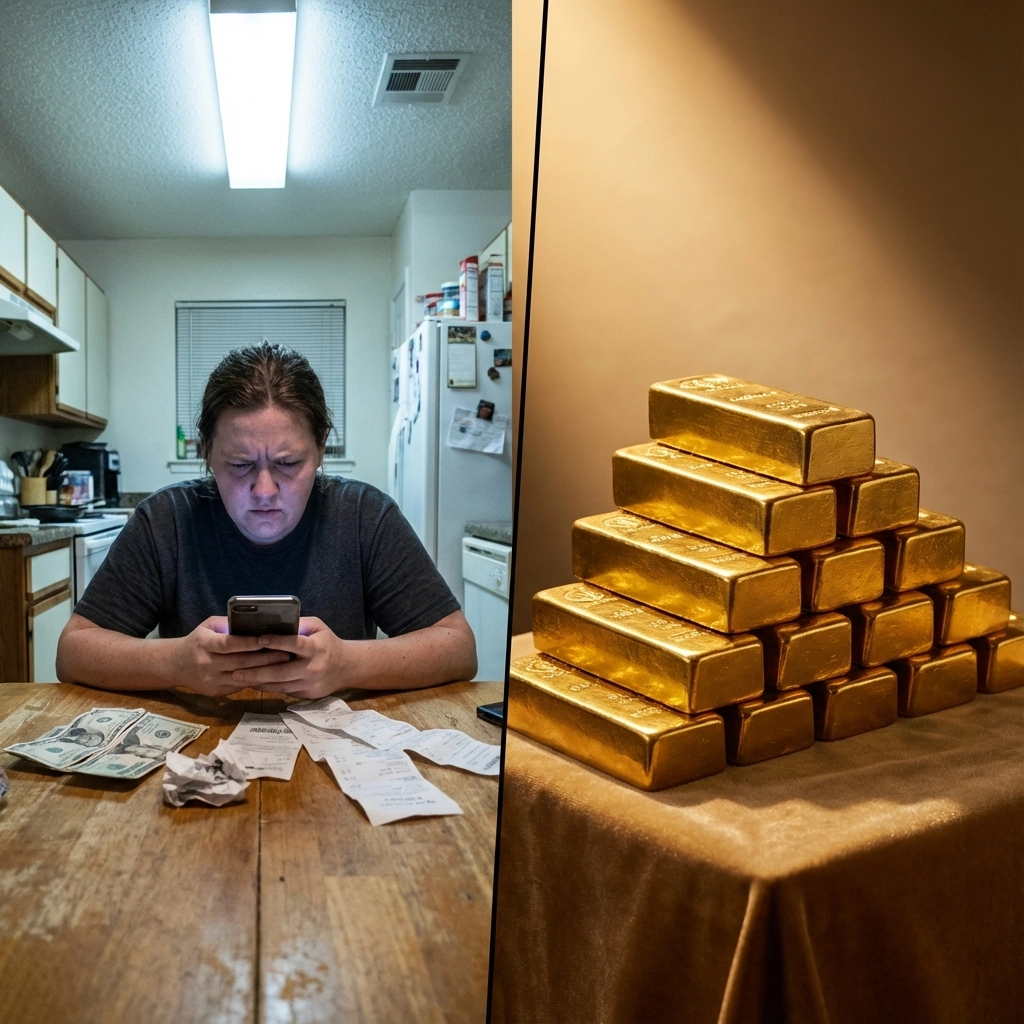
Gold hitting record highs isn't just rich people drama. It's a canary in the economic coal mine, singing loudly that something's not right with the broader financial system.
You don't need to buy gold to benefit from paying attention to what its price is telling us. Use it as a signal to prepare your own finances for potential turbulence ahead.
While wealthy investors are buying gold to protect their portfolios, regular folks can protect themselves by building emergency funds, locking in favorable rates where possible, and preparing for the economic uncertainty that record gold prices usually signal.
The drama isn't just for the rich; the economic forces behind it affect all of us.
Be mindful, be watchful and good luck!