



September 18, 2026
Three-point-four percent inflation does not sound like an economic emergency.
It is not 9%. It is not 14%. It does not come with the kind of dramatic grocery-store sticker shock that makes every trip to the supermarket feel like a personal insult.
And yet, on September 16, the Federal Reserve raised interest rates anyway.
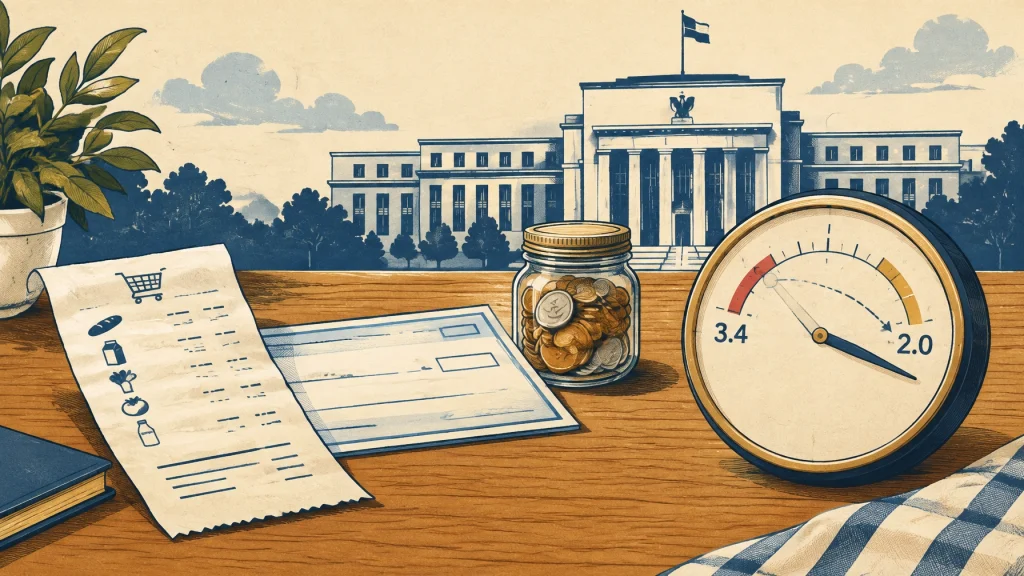
That is the part that seems strange. Inflation eased to 3.4% annually in July, down from 3.5%, but the Fed still decided the economy needed another dose of higher borrowing costs. The federal funds rate now sits in a target range of 3.75% to 4%.
Why tighten policy when inflation is already moving in the right direction?
Because the Fed is not only looking at the number on today’s report. It is also looking at what people, businesses, and markets might do next.
That is where the idea of second-order effects comes in.
First, what does 3.4% inflation mean?
Inflation is the rate at which prices are rising compared with the same period a year earlier.
So, if a household spent $100 on a representative basket of goods and services last year, that basket would cost roughly $103.40 today, assuming the 3.4% figure applied evenly. Real life is messier, of course. Rent, insurance, food, fuel, and medical care do not all rise at the same speed.
The important point is this:
Inflation at 3.4% does not mean prices are falling. It means prices are still rising, just more slowly than before.
That distinction gets lost in everyday conversation. When inflation drops from 8% to 3.4%, the pace of price increases has cooled. But the higher price level remains. The grocery bill does not rewind itself to 2020 because inflation has moderated.
The Federal Reserve’s longer-run target is 2% inflation, measured by the personal consumption expenditures price index. The Fed says stable, low inflation helps households and businesses make better decisions about saving, borrowing, hiring, and investing. Its explanation of the 2% goal is available directly from the Federal Reserve.
So 3.4% is better than 9%. It is also meaningfully above 2%.
For the Fed, that gap matters.
The first-order effect: oil gets expensive
Let’s use a simple example.
Suppose a geopolitical crisis pushes oil prices higher. That is the first-order effect: energy becomes more expensive.
Gasoline costs more. Trucking companies pay more to move goods. Airlines pay more for jet fuel. Factories pay more to operate machinery and transport raw materials.
That first hit is unpleasant, but it may eventually fade. Oil prices can fall. Supply chains can heal. Consumers can drive less. Producers can pump more.
The problem begins when the original shock starts changing everyone’s expectations.

Second-order effects: the inflation after the inflation
A second-order effect is what happens after the initial event has worked its way through the economy.
Oil goes up. That is first-order.
Then:
- Workers ask for larger raises because groceries, rent, and transportation cost more.
- Businesses raise prices in advance because they expect their own costs to keep climbing.
- Landlords adjust rents based on what they believe future costs will be.
- Suppliers build larger increases into contracts.
- Consumers buy sooner because they fear prices will be higher next month.
- Companies begin treating 3% or 4% annual price increases as normal.
That is second-order inflation.
The danger is not that one barrel of oil costs more. The danger is that the entire economy starts behaving as if inflation is permanent.
Think of it like a thermostat. The first energy shock turns the heat up. Second-order effects happen when everybody in the house starts turning up their own thermostat because they assume the room will keep getting colder.
Once expectations move, inflation can become self-sustaining.
A business that expects its costs to rise 5% may raise prices 5% today. Employees who see those prices may demand higher wages. The business then sees higher labor costs and raises prices again.
No single person has to be acting irrationally. Everyone may simply be protecting themselves. Unfortunately, the collective result can be a wage-price cycle that is very difficult to stop.
The lesson from 2021: “transitory” was not a magic spell
The Fed’s current caution is partly a reaction to what happened after the pandemic.
In 2021, many inflation pressures looked temporary. The economy was reopening. Factories and ports were struggling to catch up with demand. Used-car prices jumped. Energy prices rebounded from unusually low levels. Government stimulus had put money in household accounts.
There were reasonable arguments for believing some of those pressures would fade.
The mistake was treating the temporary explanation as a guarantee.
The Federal Reserve’s June 2021 meeting minutes show officials discussing supply bottlenecks, labor shortages, higher energy prices, and the possibility that inflation would prove transitory. At the time, that judgment was understandable. In hindsight, the response was too slow.
Inflation did not simply drift back to normal. It broadened across the economy and eventually reached 9.1% in June 2022, the highest annual CPI reading in roughly four decades.
By then, the public had already noticed. Businesses had already changed pricing strategies. Workers had already begun negotiating around a higher cost of living. Consumers had already learned to expect another unpleasant surprise at the checkout counter.
The Fed was forced into a much more aggressive tightening campaign than it might have preferred.
That history is sitting in the room today.
The current rate increase is a pre-emptive strike. The Fed is deliberately accepting some economic slowdown now in hopes of avoiding a much larger inflation problem later.
That does not mean the Fed knows exactly what will happen. Central banking is not weather forecasting with better stationery. It means officials believe the cost of waiting could be greater than the cost of acting.
Why raise rates at all?
The Federal Reserve cannot produce more oil, repair a port, grow more wheat, or manufacture computer chips.
It cannot directly control a war, a drought, a rent shortage, or a pharmaceutical supply chain.
What it can do is influence the amount and cost of credit in the economy.
Higher interest rates make mortgages, auto loans, business loans, and credit-card balances more expensive. They encourage saving and discourage some forms of spending. Companies may delay expansion. Households may postpone buying a car or a home.
That sounds unpleasant because it is unpleasant.
But cooling demand can prevent businesses from passing every cost increase through to customers. It can also make it harder for a temporary supply shock to become a permanent pricing habit.
The Fed is not trying to punish people for buying sandwiches. It is trying to keep the whole economy from assuming that every sandwich will cost 4% more next year forever.
What does the 2% target mean for your paycheck?
This is the part that matters at the kitchen table.
Suppose someone earns $60,000 per year and receives a 3.4% raise. That sounds decent. The raise is $2,040 before taxes.
But if the cost of living also rises 3.4%, the worker has not gained purchasing power. The paycheck is larger, but it buys roughly the same amount.
That is the treadmill.
A raise only improves a household’s position when it grows faster than the cost of living. If inflation is 2% and a worker receives a 3.4% raise, the household has gained some real purchasing power. If inflation is 3.4% and the raise is 3.4%, the worker is mostly running in place.
The compounding effect matters, too.
At 3.4% annual inflation, a $100 basket of goods would cost about $118 after five years if prices rose at that rate consistently. At 2% inflation, the same basket would cost about $110.
That eight-dollar difference may not sound dramatic on one item. Multiply it across rent, insurance, food, health care, utilities, and transportation, and the gap becomes a serious household-budget problem.
Stable prices do not mean prices never rise. They mean people can make plans without needing a raise every year simply to preserve yesterday’s standard of living.
What the Fed is watching now
The September 16 rate hike tells us the Fed is focused on more than the July improvement.
Officials are watching:
- Whether inflation continues moving toward 2% or stalls in the 3% range.
- Whether wages are rising faster than productivity.
- Whether businesses continue raising prices before their costs actually arrive.
- Whether households and financial markets expect higher inflation to persist.
- Whether oil or other supply shocks begin spreading through the broader economy.
- Whether higher rates are slowing hiring, housing, and consumer demand too sharply.
This is the balancing act. Tighten too little, and inflation expectations may become unmoored. Tighten too much, and the economy may slow more than necessary, damaging employment and investment.
The Fed is trying to land a plane on a runway while the runway is being moved. That is why the policy debate never stays simple for long.
The practical takeaway
The 3.4% inflation number is good news compared with the worst of the last cycle. It means the pressure has eased.
It is not, however, proof that the inflation problem is solved.
The Fed’s message is that inflation must come down before today’s temporary shocks become tomorrow’s standard business practice. The central bank is willing to accept slower growth and higher borrowing costs now because it does not want to repeat the delay that helped inflation climb to 9%.
For households, the most useful question is not whether 3.4% sounds scary.
The better question is: Are wages, savings, and investments keeping up with the cost of living?
That is where inflation becomes personal. A stable 2% environment gives a decent raise room to improve a family’s life. A 3.4% environment can turn the same raise into a treadmill.
And that is why the Fed panicked.
Disclosure: Regular Guy Economics is not a financial advisor. This article is for educational and informational purposes only and is not investment advice. Consider your own circumstances and consult a qualified professional before making financial decisions.
For more plain-English economic commentary, visit Regular Guy Economics and explore the blog archive.
Be mindful, be watchful and good luck.